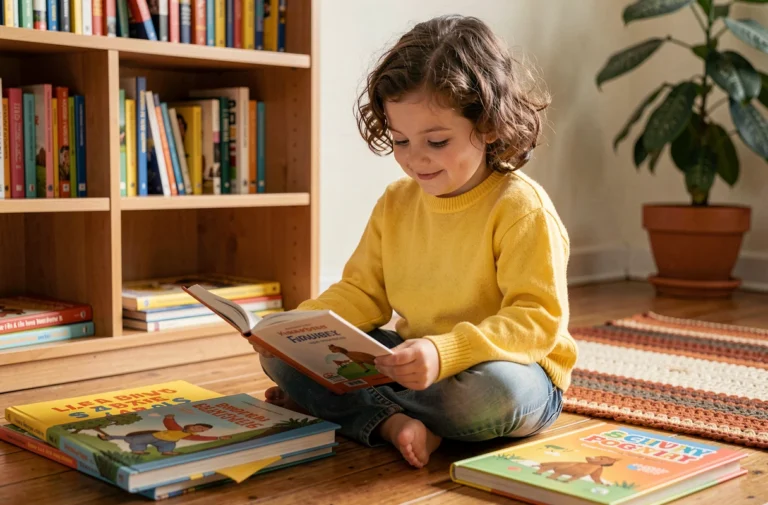
Some babies can sit up as early as five months, while others may not do so until eight or nine, without this indicating a delay. Pediatric recommendations advise against propping a baby up to sit before they can do so on their own, but many parents wonder how to support this stage without rushing or forcing it.
Supporting the learning of the sitting position is quite an art: neither rushing nor passively waiting. It is mainly about facilitating this natural movement, not sabotaging this progression by wanting to go too fast or by repeating actions that sometimes hinder motor autonomy. A few concrete guidelines can help adapt daily actions and recognize the signals that indicate the time has come.
Understanding the natural rhythm of learning to sit
There is no one-size-fits-all rule: each baby progresses at their own pace. The ability to sit does not follow a predetermined schedule or a competitive logic. It is a journey made up of successive progressions, where each stage of motor and psychomotor development prepares for the next. Before sitting, the child gradually strengthens their neck, then their torso, learns to control their head, experiments with rolling over, and pushes up on their arms while lying on their stomach. All of this structures their spine and strengthens the muscles essential for sitting posture.
Forcing a child to sit before they are ready risks weakening muscle groups that are still developing. Signs of readiness are visible: the baby holds their head well, turns easily, and begins to push up on their arms. At this stage, it is enough to provide a stimulating, clear, and unobstructed environment for them to try at their own pace.
To go further, baby sitting on Bella Maman details how to adjust practices according to each child’s development without rushing the stages. Remember that each journey is unique: some babies will sit alone at six months, while others will do so much later. This diversity is not a problem but the logical consequence of a subtle mix of genetics, environment, and family habits.
Prematurely placing a child in a sitting position does not accelerate autonomy. On the contrary, it can disrupt bodily confidence and slow down coordination. Every advancement arises from a balance of patience, observation, and respect for the child’s rhythm.
How to support baby without rushing the stages?
First, you need to observe. The first signs of wanting to sit appear gently: the baby tries to find their balance, pivots, leans to the side, and engages their arms to lift themselves up. Before any intervention, allow space for their natural curiosity. There is no need to impose: it is better to guide gently, monitor their reactions, and never force the position.
Support resembles more of a support than a direction. Give them time on the floor, on a firm mat: here, the child freely experiments with their supports, discovers their limits, and tries to reach for objects just out of reach, thus mobilizing their overall motor skills without unnecessary constraints.
Here are some key points to prioritize to support this progression:
- Alternate positions: on their stomach (tummy time), on their back, on their side to vary bodily experiences.
- Allow them the opportunity to pivot and roll over by themselves, without hasty intervention.
- Encourage the use of arms: pushing, pulling, grabbing—everything is good for strengthening tone and balance.
The best parental support? Attentive presence. You can intervene if your baby asks for help or seems stuck in an uncomfortable position, but never seek to speed up the progression. Acquiring the sitting position involves experimentation, repetition, and trust, not constraint.
Imposing sitting too early can cause unnecessary muscle tension. When the child is ready, they will show good overall tone, control of their torso and head, and genuine curiosity about their surroundings. To help them, position yourself nearby, encourage them, show them you are there, while allowing them to take the initiative. Patience, once again, remains the best guarantee of healthy motor development.

Daily actions and tips to encourage your child’s autonomy
Everyday life is full of opportunities to promote your baby’s motor autonomy. Simple actions, repeated over the days, lay the foundations of their motor skills and reinforce confidence in their abilities. Prepare a safe space on the floor, free of any superfluous items: a firm mat and a few suitable toys are more than enough. Prioritize tummy time, which will strengthen the neck, shoulder, and torso muscles, all essential for achieving the sitting position independently.
A colorful object placed at a reasonable distance becomes an invitation to stretch, turn, and mobilize arms and legs. This repetition, without ever forcing them, naturally facilitates the sitting position. Encourage them to regularly change positions—back, side, stomach—to stimulate balance and coordination.
Some concrete tips:
- Encourage barefoot walking whenever possible: this develops balance and body schema integration.
- Offer games where the child must reach out, pivot, or move slightly to grab an object.
- Allow time for experimentation, even if it involves small falls to the side or hesitations: this is how they learn to manage their body.
Stay attentive to their reactions and adjust your support. Autonomy is not decreed; it is built on trust, under the watchful eye of an adult who guides without ever imposing. At each stage of motor development, the child outlines the contours of their sitting posture at their own pace while laying the foundations for their balance for the future. Time does its work: soon, they will sit independently, and this silent victory will taste like a true first step towards independence.