
A candidate getting into the car on the day of the practical exam has often repeated the same actions for weeks. The difference between 20 points and 31 points does not lie in the mastery of the steering wheel, but in the ability to show the examiner a constant awareness of the environment.
Since the reform of the evaluation grid, examiners assess less technical perfection and more the actual management of risks. One can achieve the maximum score despite a slightly late downshift or a trajectory that could be improved, as long as anticipation remains constant.
Further reading : Helping Baby Sit: Tips to Support Each Stage of Their Development
The first minute after starting: the moment everything changes
This is rarely mentioned in classic guides, but several examiners emphasize that the action phase weighs heavily in the evaluation. Even before having driven 200 meters, the candidate has already sent strong signals.
Specifically, it starts at the moment of getting settled. Adjusting the mirrors (including the interior one, even if it seems correct), a quick check of the seat and seatbelt, then visual check at 360° before any merging. This complete overview, including blind spots, must be visible to the examiner: turn your head fully, not just move your eyes.
See also : Journey to the Heart of Beauty Institutes in Paris: The Ultimate Experience
Exiting the examination center or the parking space constitutes the first real situation that is graded. Candidates aiming for 31 out of 31 do not just check the lane; they anticipate the priority of the traffic flow and adjust their merging without forcing their way in. To delve deeper into strategies to achieve 31 out of 31 on the driving test, this mastered starting point is the foundation of everything else.

Risk management in driving tests: what the examiner really notes
The evaluation grid distinguishes three levels of competence for each item: 0 (not acquired), 1 (in the process of acquisition), and 2 (acquired). To score 31 points, almost all items must be rated at the maximum. The examiner is not looking for instructor-level driving; they are looking for safe, smooth, and context-appropriate driving.
Anticipate rather than react
The difference between a 1 and a 2 on the grid often comes down to a delay of a few seconds. A candidate who brakes when approaching a busy pedestrian crossing receives a 1. The one who had already eased off the accelerator upon spotting the pedestrian on the sidewalk receives a 2.
This pattern is found everywhere: hidden intersections, bicycles in blind spots, children near a school. The examiner looks to see if you have noticed the danger before it becomes urgent. It is not a matter of reflexes; it is about constant visual scanning, far ahead of the hood.
The “sharing the road” items make the difference
The section “sharing the road with other users” traps many candidates. One can be technically clean behind the wheel and lose points for not leaving enough distance from a cyclist, or for overtaking a stopped bus without checking if a passenger was getting off.
- Leave at least one meter of lateral space when overtaking a bicycle in urban areas, more outside urban areas.
- Consistently slow down when approaching a bus stop with hazard lights on.
- Adjust speed in residential areas even in the absence of a 30 sign, if the configuration requires it (cars parked on both sides, reduced visibility).
These behaviors are not “bonuses”: they form the foundation of the evaluation on risk awareness.
Bonus points on the driving test: two often overlooked points
The grid provides one point for economical and ecological driving, and one point for courtesy. These two bonus points allow reaching 31 even if a main item is rated at 1 instead of 2. But they also help secure a maximum score.
For the eco-driving point, favor higher gears as soon as speed allows and anticipate decelerations by easing off the accelerator rather than braking late. The courtesy point is earned by letting a hesitant pedestrian pass or facilitating a difficult merge, without creating an ambiguous situation for other users.
Feedback varies on the actual weight of these bonus points in the final decision, but one thing is constant: a candidate who earns them shows the examiner a maturity in driving that positively colors the entire evaluation.
Concrete preparation before the day of the practical exam
The weeks leading up to the exam count just as much as the D-day. Here’s what distinguishes candidates who achieve the maximum score from those who hover around 25 points.
- Drive in the exam area with your instructor to identify complex intersections, unmarked 30 zones, and local peculiarities (multi-lane roundabouts, poorly marked bike lanes).
- Specifically work on interior and exterior checks: each lesson should include at least one sequence where the instructor evaluates the quality of visual scanning.
- Simulate complete exam conditions (25-minute route, required maneuver, verification questions) at least three or four times before the actual date.
- Get enough sleep the night before: fatigue primarily degrades peripheral attention, precisely what the examiner evaluates continuously.
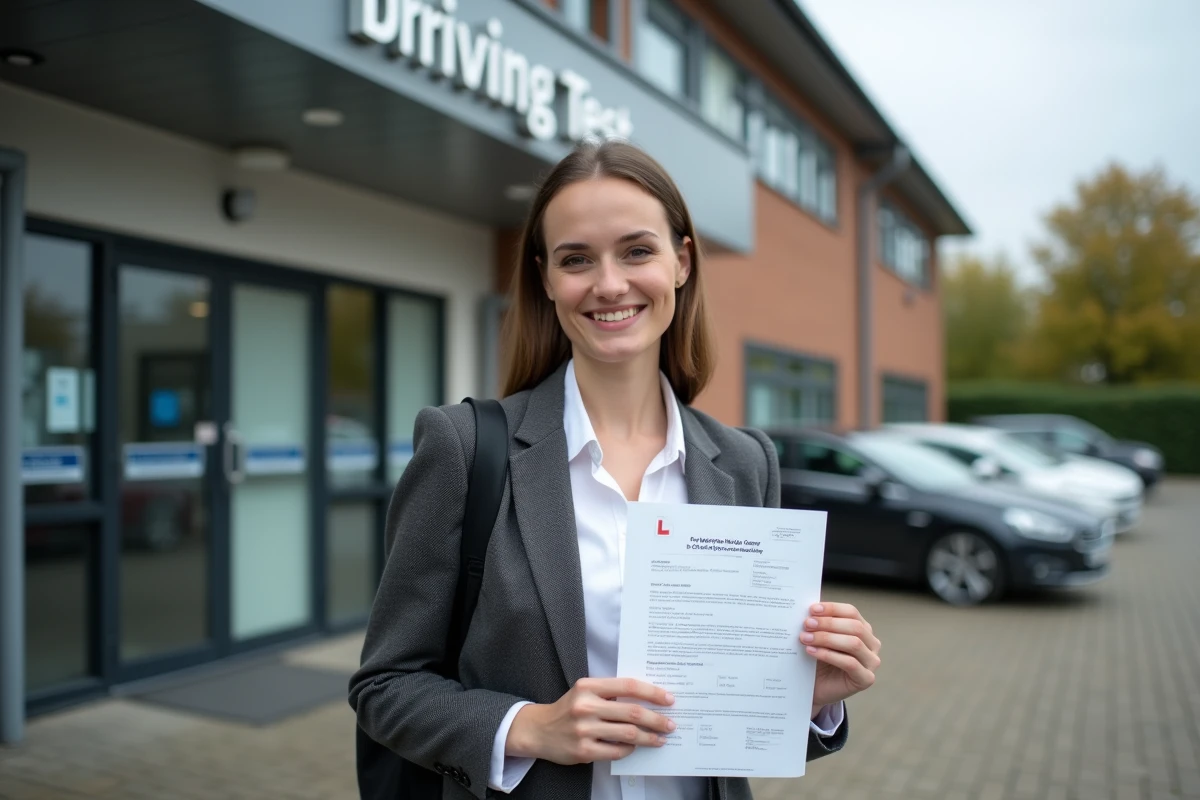
Scoring 31 out of 31 is not reserved for candidates who make no mistakes. It is the result of driving where every decision, from the first glance in the rearview mirror to the last yield sign, shows that the candidate has understood one simple thing: driving is reading the road for others as much as for oneself.