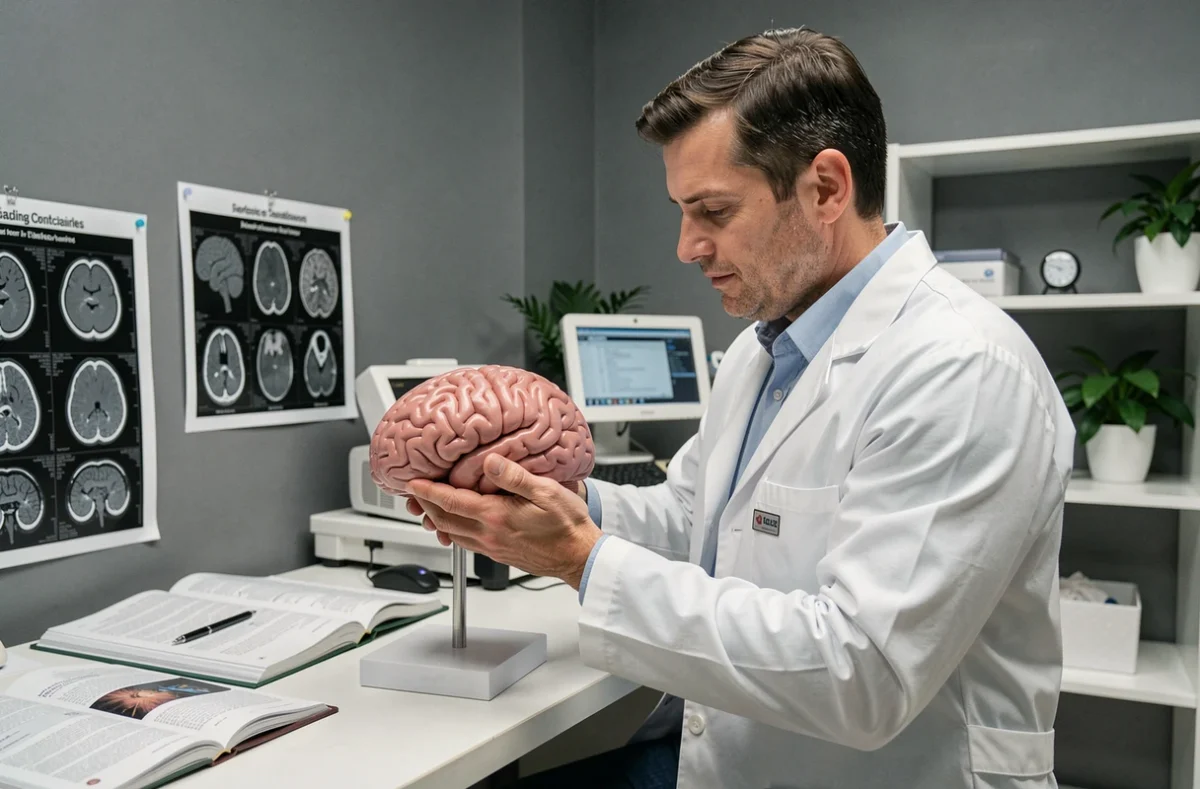
You’re standing, everything is fine, and the next moment the world fades away. Loss of consciousness, even briefly, reflects a sudden disruption in brain activity. Two systems must work together to maintain wakefulness: the ascending reticular activating system, located in the brainstem, and a broader cortical network that enables you to perceive your surroundings. When either one fails, the brain disconnects.
Syncope and a drop in blood pressure: the most common mechanism
Most brief losses of consciousness are syncopal episodes. The scenario is simple: the brain stops receiving enough blood for a few seconds, and switches off.
A recent discovery identified a direct circuit between the heart and the brain. Sensory neurons in the heart wall detect a drop in blood pressure and send a signal to the brainstem. This signal slows the heart rate and causes a further drop in blood pressure, triggering fainting.
Understanding when the brain disconnects involves this heart–brain pathway, which explains why a simple change in position or a strong emotion can sometimes trigger a fainting spell.
One clinical clue can help distinguish between situations: fainting during exercise or while lying down should raise suspicion of a cardiac cause. This is quite different from fainting while standing in a hot room, which is more consistent with so-called reflex syncope.
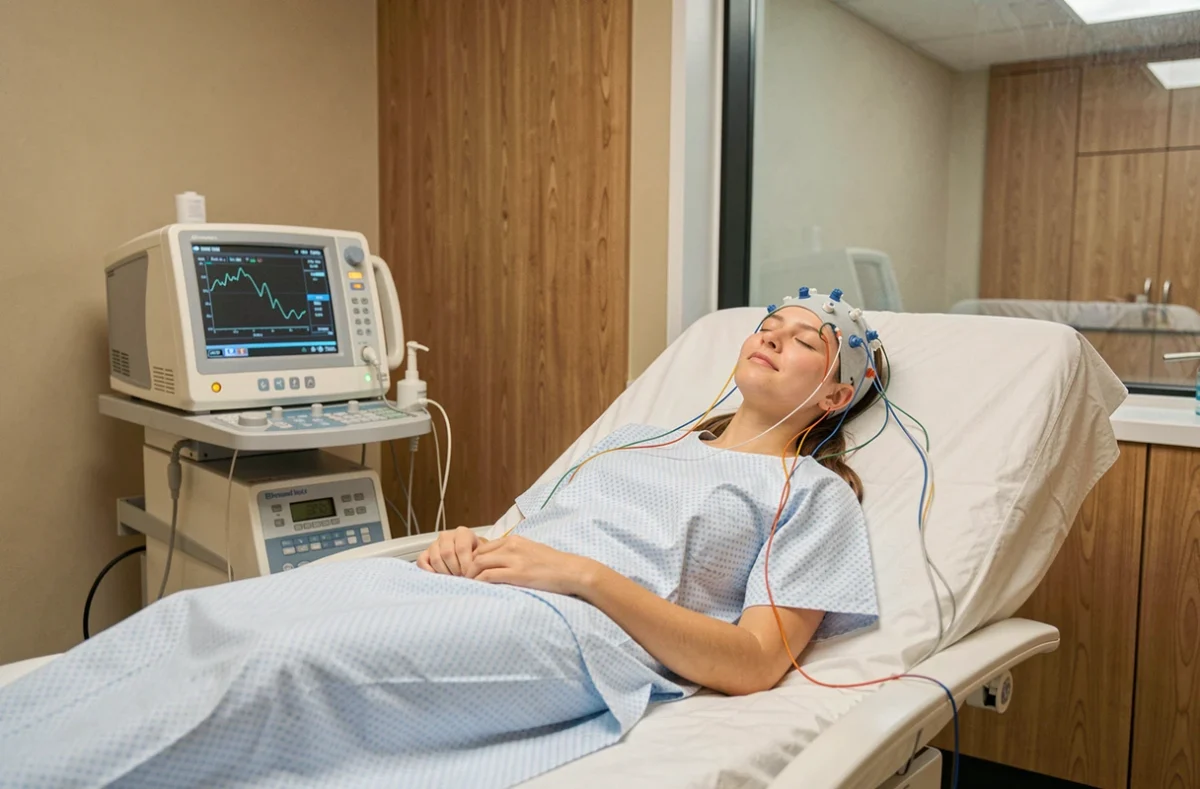
Prolonged loss of consciousness: when the brainstem or cortex is affected
Syncope lasts a few seconds. When loss of consciousness continues for longer, other mechanisms are involved. Coma, for example, implies damage either to the brainstem (which controls wakefulness) or to both cerebral hemispheres at the same time.
Mental confusion is an intermediate state: the person remains awake but disoriented and unable to respond appropriately. Epileptic seizures are another possibility. During a generalized seizure, abnormal electrical activity spreads through the cortex and interrupts conscious processes.
These distinctions matter when deciding on treatment. Syncope followed by full recovery within a few minutes does not require the same level of urgency as persistent confusion or loss of consciousness following a head injury.
Reflex syncope, orthostatic hypotension, cardiac causes: three categories to distinguish
- Reflex (or vasovagal) syncope often occurs while standing, in situations involving heat, pain, or emotional stress. Recovery is rapid and complete.
- Orthostatic hypotension occurs when moving from a lying to a standing position. It particularly affects older adults and people taking certain blood pressure medications.
- Cardiac syncope (caused by an arrhythmia or an obstruction to blood flow out of the heart) can occur during exercise or without warning. It is the most dangerous type because it can signal impending cardiac arrest.
Documenting a fainting spell that doesn’t recur in the hospital
Have you ever noticed that a medical examination carried out after the event can seem completely normal? That’s the paradox of syncope: by the time the patient reaches the emergency department, the problem has often disappeared. A one-off ECG may show nothing if the abnormal heart rhythm is intermittent.
Witness accounts are just as useful as additional tests. Clinical guidelines emphasize the circumstances before, during, and after the episode. Was the person standing or lying down? Were there any involuntary movements? How long did the loss of consciousness last? These details help distinguish syncope from an epileptic seizure, especially when the person affected remembers nothing.
Matching the monitoring period to how often episodes occur
NICE guidelines (reference CG109) recommend a logical approach to choosing cardiac monitoring:
- If fainting spells occur several times a week, a standard 24- to 48-hour Holter monitor may be enough to capture the abnormality.
- If episodes occur one to two weeks apart, a longer-term external monitor is preferable.
- If fainting spells are rare (less than once a month), an implantable monitor placed under the skin is the most reliable way to document an isolated episode.
The UK ASPIRED trial assessed the value of an adhesive cardiac monitor worn for up to 14 days after unexplained loss of consciousness. The trial has ended, but its final results have yet to be confirmed, illustrating that research into post-syncope monitoring is still ongoing.

Smartwatches and detecting loss of consciousness: what’s the reality?
Smartwatches and fitness bands now measure heart rate continuously. Some models even offer a built-in ECG. This can give the impression that you can monitor your heart around the clock.
In practice, a smartwatch ECG is a brief, single-lead recording. You have to start the measurement manually and remain still while it records. An arrhythmia that occurs at night or during intense exercise may not be captured.
The difference compared with a medical monitor is fundamental. A Holter monitor or implantable monitor tracks heart rhythm continuously, without any input from the user, and for much longer. A smartwatch can detect persistent atrial fibrillation, but it remains a tool for occasional screening, not prolonged monitoring.
For someone who has experienced an unexplained fainting spell, relying solely on a smartwatch may provide false reassurance. A normal 30-second recording does not mean the heart is functioning normally all the time.
Loss of consciousness remains a signal the body sends when something is wrong, even briefly. Recording the exact circumstances, getting an account from someone who was there, and seeking medical advice promptly can help guide the assessment far better than a single test carried out too late.