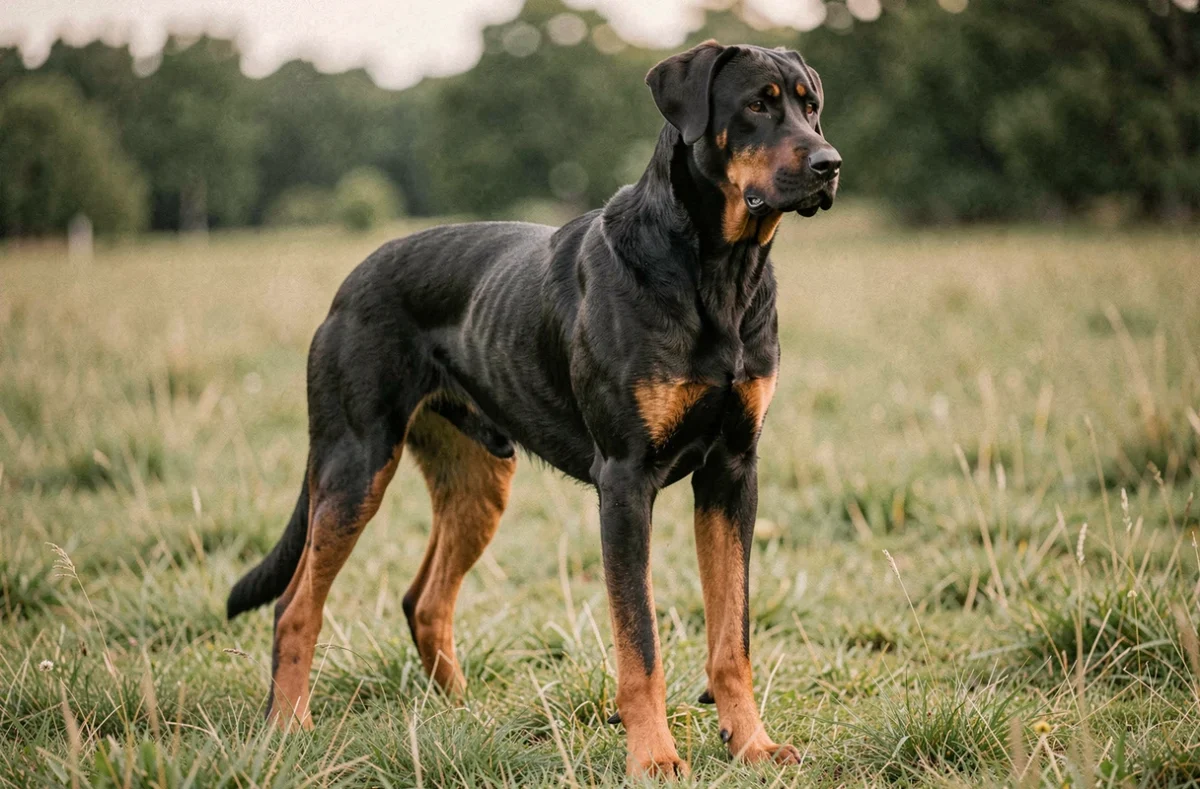
Out in the field, the Beauceron is easy to recognize by its hind legs: two well-formed dewclaws on each rear leg, unlike most other breeds, which have none. This anatomical trait, set out in FCI Standard No. 44, is the first thing a judge checks in the show ring.
But for anyone looking for a working dog or family companion, double dewclaws are no indication of a dog’s temperament or abilities. Understanding what they mean in everyday life, particularly when it comes to care and injury risks, helps you make an informed choice when selecting a breeder.
Injured Beauceron dewclaws: prevention and veterinary decisions
A Beauceron that runs through woodland, works with livestock, or regularly ventures over rough terrain will often snag a dewclaw. These extra toes do not touch the ground, so they do not wear down naturally and can catch on brambles, wire fencing, or roots. The result may be a torn nail, bleeding, or sometimes an infection.
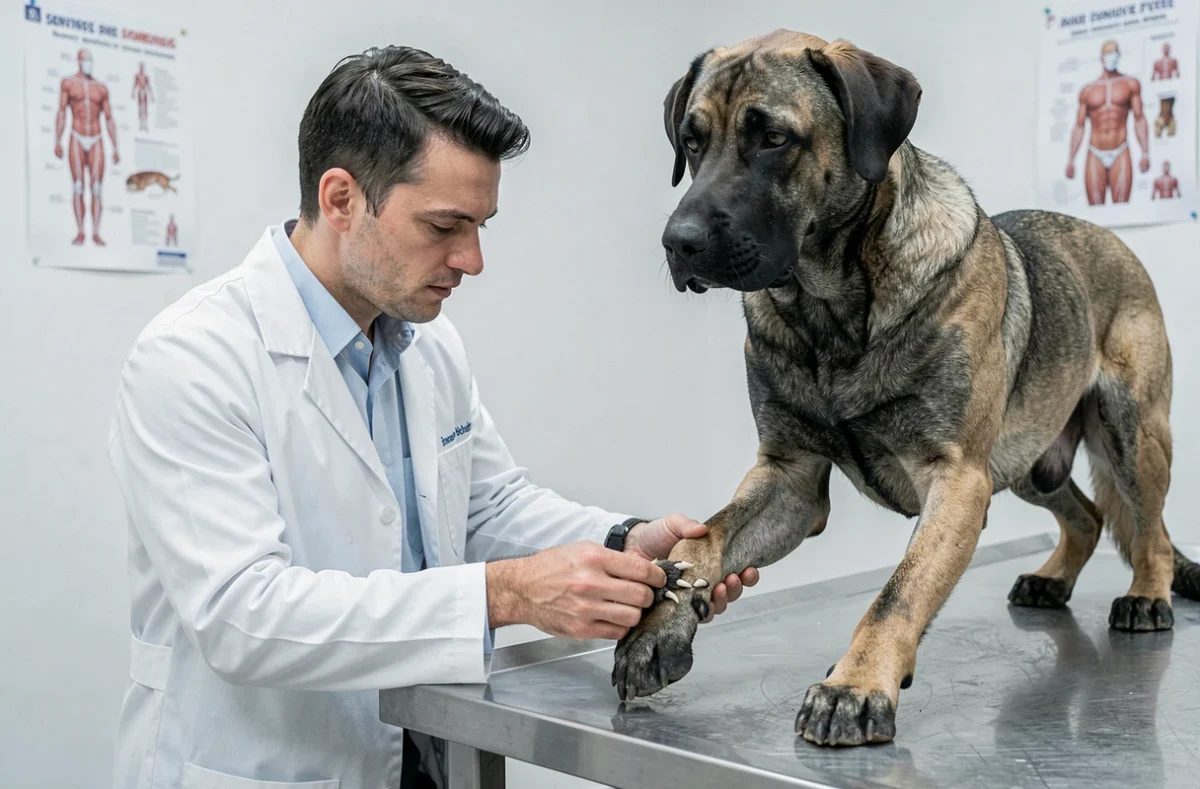
The first preventive measure is simple but often overlooked: check the dewclaws every three to four weeks. Because they are not worn down by contact with the ground, their nails grow longer faster than those on weight-bearing toes. If you have never trimmed a dog’s nails before, having a veterinarian demonstrate it first can help prevent cutting too short and reaching the blood vessel inside the nail.
If a dewclaw is repeatedly injured despite regular care, removal may be considered. This is a veterinary procedure prompted by a recurring medical problem, not a cosmetic operation. The veterinarian will assess whether the dewclaw’s bone structure is sound or whether the toe is poorly jointed, loose, and prone to catching on every outing. Removing an injured dewclaw is a decision made on a case-by-case clinical basis, not a routine measure.
For an owner who shows their Beauceron for confirmation, removing a dewclaw means the dog no longer meets the breed standard. This presents a practical trade-off: protect the dog’s health or preserve its eligibility for shows.
In most cases, careful maintenance is enough to avoid reaching that point. If you are considering getting a puppy, it is worth checking the strength and placement of both parents’ dewclaws, since the Beauceron’s double dewclaws vary in structure from one dog to another.
Choosing a Beauceron puppy: criteria beyond dewclaws
Focusing all your attention on dewclaws when visiting a breeder means overlooking factors that have a greater impact on everyday life with the dog. Dewclaws that meet the breed standard are a prerequisite, not a guarantee of anything in terms of health or behavior.
Health screenings to ask the breeder about
A reputable breeder will share the parents’ screening results before you even ask. The main points to check are:
- Official X-ray scores for hip and elbow dysplasia in both parents. The Beauceron is a large breed, and these joint conditions can severely limit mobility.
- BAER (Brainstem Auditory Evoked Response) hearing tests for the puppies, which can detect unilateral or bilateral deafness that is not apparent from observation alone.
- A family history of dilated cardiomyopathy, a heart condition documented in this breed.
Discuss these points with the breeder and verify them with your own veterinarian. Conformation to the breed standard is no substitute for health screening of the breeding dogs.
Temperament and living environment
The Beauceron is a herding dog bred to move flocks over long distances. This heritage has shaped a dog that needs clear boundaries and plenty of daily exercise. Without enough activity, it gets bored—and lets you know.
During a visit to the breeder, observe how the mother behaves with her puppies and how the puppies react to a stranger. A puppy that consistently hides or shows early signs of aggression warrants a closer assessment. The parents’ temperament remains the best indicator of a puppy’s future character.
Common myths about the Beauce Shepherd’s double dewclaws
A few misconceptions have circulated for more than a century, fueled by debates among breeders and veterinarians that have never really reached a definitive conclusion.
The first myth is that double dewclaws act like cleats on slippery or snowy ground. In reality, dewclaws do not touch the ground during normal movement. Their functional role in the Beauceron has not been demonstrated. The breed standard requires them as a breed marker, not as a biomechanical tool.
The second myth claims that a Beauceron without double dewclaws is not a “real” Beauceron. This trait is not passed on consistently: some purebred puppies are born with just one dewclaw or none at all, while crossbreeds may have double dewclaws. Double dewclaws are not proof of genetic purity; they are a criterion for conformity to the breed standard.
The third myth concerns routine preventive removal. Some owners believe it is best to remove dewclaws at birth to prevent future problems. This is not justified in a healthy dog whose dewclaws are properly attached. It also goes against the requirements of the breed standard for confirmation.
Beauceron dewclaw care: routine and tools
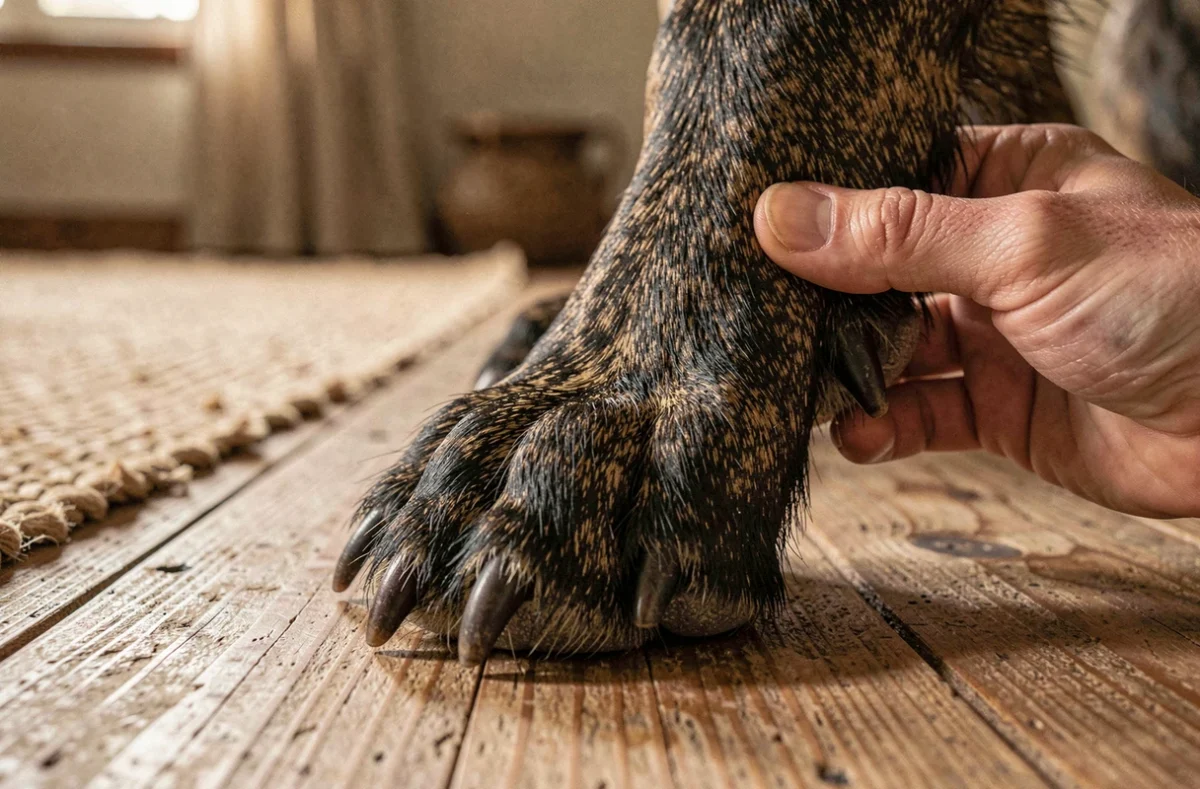
Regular dewclaw care requires no special skills or expensive equipment, but it does take consistency. A nail clipper suited to the dog’s size (guillotine-style or plier-style) and a nail file are all you need.
- Trim the dewclaw nail at an angle, staying two millimeters away from the pink area visible through the nail. For black nails, trim in small increments until you see a gray spot in the center of the cut surface.
- Check the skin around the dewclaw: redness, swelling, or scabs may indicate an early infection or unusual rubbing.
- After an outing in dense terrain (brambles, brush, tall grass), feel each dewclaw to check for a split nail or a skin injury.
This routine takes just a few minutes and can be incorporated into regular grooming. A dog accustomed to having its paws handled from a young age will tolerate it without stress.
The Beauceron’s double dewclaws remain a defining feature of the breed, but they should never be the only factor in choosing a dog. A well-maintained dewclaw on a well-balanced dog from health-screened parents is rarely a problem. It is the overall picture—health, temperament, and lineage—that makes the difference between a good choice and a rushed purchase.