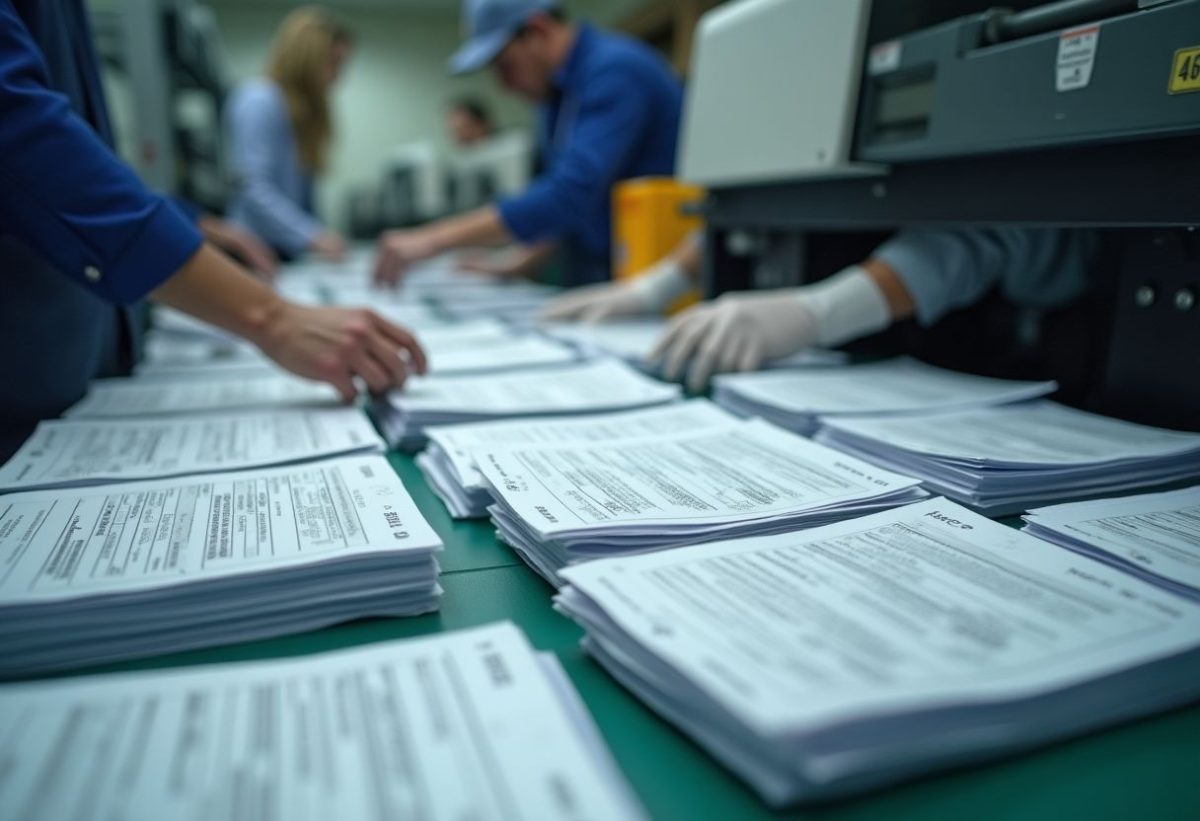
In a democratic landscape where transparency and compliance are essential, the printing of ballots represents an unavoidable aspect of elections. But how much does it actually cost to produce 10,000 ballots while adhering to legal requirements? This process, often unknown to the general public, requires meticulous attention to detail to ensure that electoral documents are both secure and authorized. From the choice of paper to printing standards, each element contributes to the total cost, thereby influencing the budget of organizations responsible for ensuring free and fair elections.
Factors Influencing the Cost of Electoral Printing
Several elements come into play when it comes to assessing the total cost of printing 10,000 ballots. These factors are both varied and specific, relating to various technical and legal aspects.
- Materials Used: The type of paper and ink employed plays a significant role. Legal standards often require specific paper that ensures the durability and readability of the ballots. The ink used must also be of high quality to avoid any risk of fraud.
- Legal Compliance: Legal specifications impose precise formats and designs that must be followed to the letter. These requirements can incur additional costs in terms of design and verification.
- Quantity and Volume: Printing in large volumes can offer economies of scale but requires rigorous logistical planning to ensure that each ballot meets established standards.
Legal Standards and Technical Requirements
Ballots are not just simple pieces of paper; they are governed by strict standards that ensure the security and reliability of the electoral process.
Laws require that each ballot be designed uniformly to avoid any confusion during the counting process. In addition to physical constraints, such as paper weight and ink type, the standards also include security measures to prevent counterfeiting. This often involves the use of watermarks or watermark papers, which increases production costs. These specifications ensure that documents remain inviolable and authentic, allowing the election printing to meet international standards.

Cost Estimation for 10,000 Ballots
The precise calculation of the printing cost for ballots depends on many factors. Here is an estimate based on real data:
- Materials: approximately 1,000 to 2,000 euros, depending on the type of paper and ink.
- Compliance and Design: approximately 500 to 1,000 euros for adherence to legal standards and ballot design.
- Printing: between 2,000 and 4,000 euros, depending on volume and savings achieved through bulk printing.
- Logistics and Distribution: 500 to 1,500 euros for secure packaging and shipping to polling stations.
Impact of New Technologies on Printing
With technological advancements, new possibilities arise for printing ballots, potentially reducing costs while increasing security.
Next-generation printers allow for faster and more precise printing, thereby reducing production time and the risk of error. Furthermore, the integration of digital verification methods, such as QR codes, offers an additional layer of security at a lower cost. These innovations not only optimize the printing process but also ensure increased transparency in the conduct of elections.
Producing 10,000 ballots in compliance with current laws is a complex task that goes far beyond simple printing. The costs, while inevitable, reflect the rigorous standards and security requirements necessary to maintain the integrity of the democratic process. Each step, from material selection to the adoption of new technologies, contributes to a reliable electoral system where every vote counts and is counted fairly.