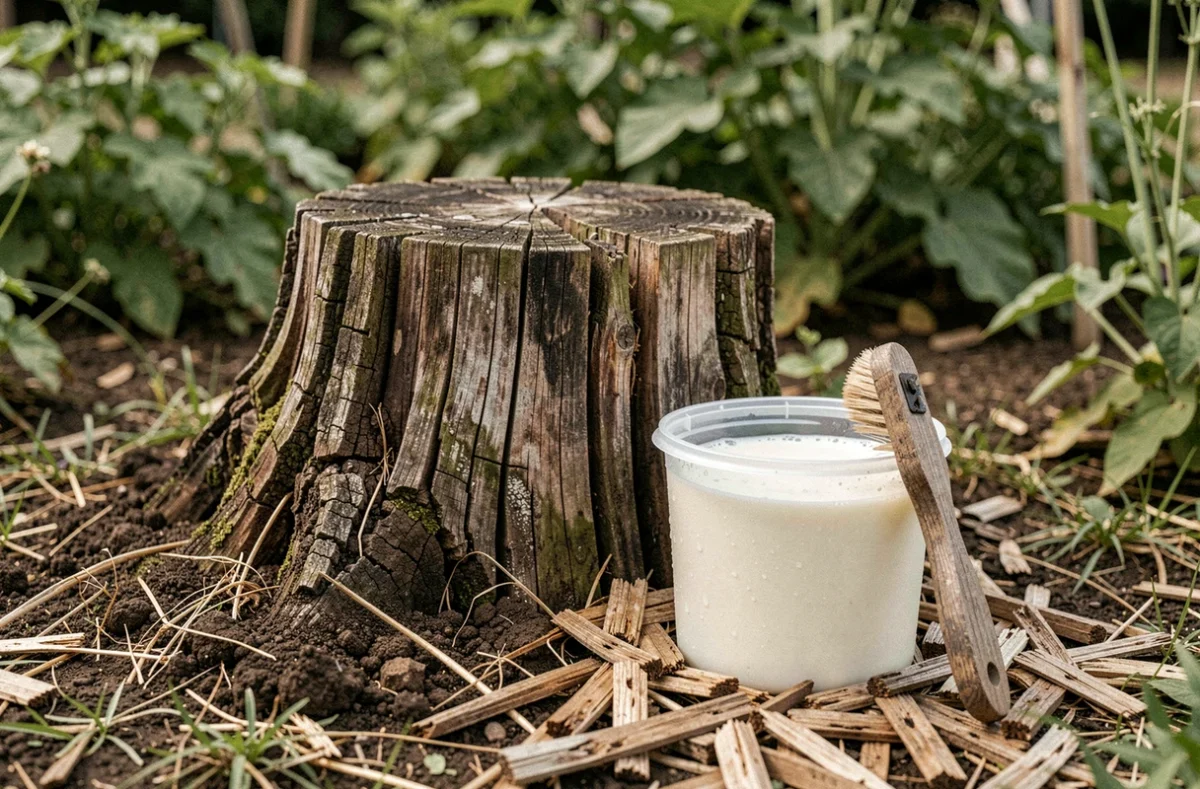
Buttermilk, this fermented buttermilk common in Brittany, circulates on gardening forums as a natural solution to accelerate the decomposition of a tree stump. The promise is enticing: pour a cheap food product into holes drilled in the wood, then wait for the lactic bacteria to do the work.
In reality, no agronomic study or documented feedback allows us to assert that buttermilk is sufficient to destroy a stump. This observation warrants a closer examination of the supposed mechanism, the actual conditions for wood decomposition, and the alternatives whose effectiveness is better established.
Buttermilk and wood decomposition: what lactic fermentation can (and cannot) do
Buttermilk contains lactic bacteria (Lactobacillus, Leuconostoc) and an acidic pH, around 4.5. These microorganisms effectively break down lactose and certain proteins, but dead wood poses a different problem. The lignin and cellulose that make up a stump resist lactic bacteria, as their decomposition requires specific enzymes, primarily produced by wood-decaying fungi (white rot, brown rot).
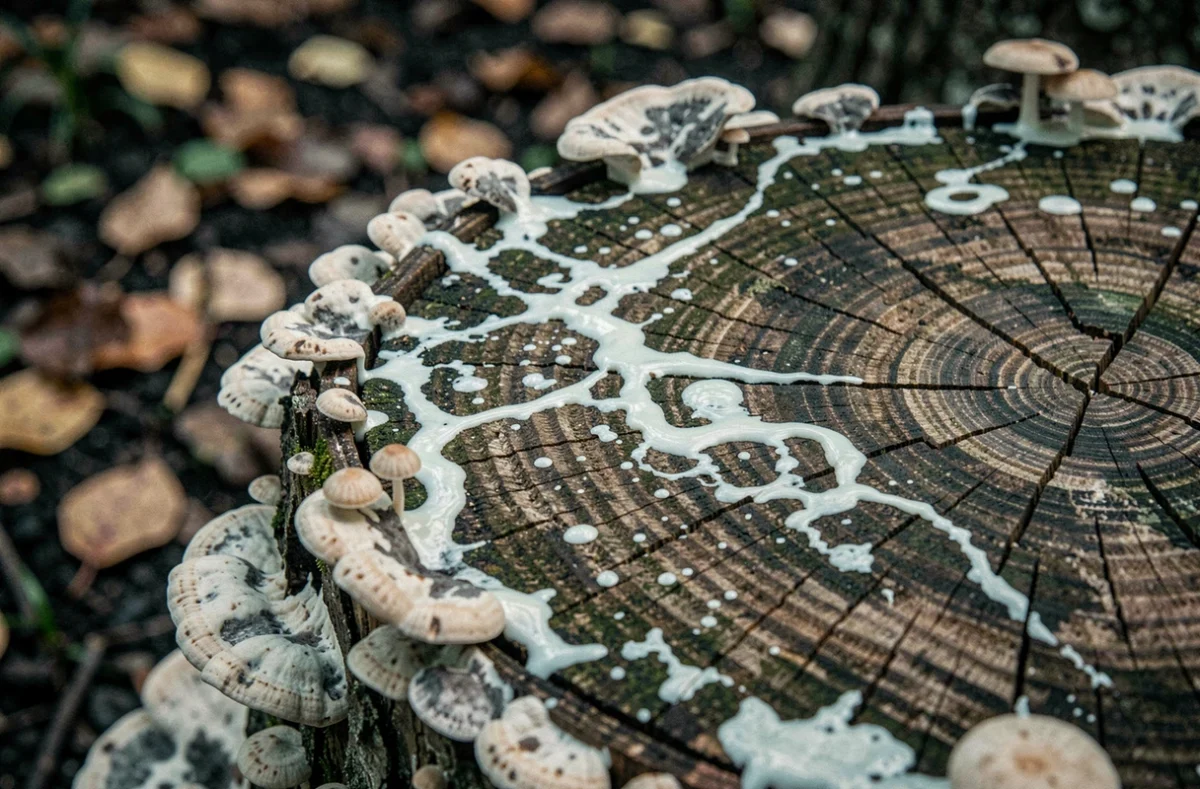
Pouring buttermilk into a stump provides moisture and a rich organic substrate. This substrate may promote the development of surface molds, but not necessarily that of fungi capable of degrading lignin. The effect observed on some forums, a superficial softening after several months, is likely more related to the maintained moisture than to the direct action of lactic ferments.
For those wishing to explore several avenues before making a choice, it remains useful to destroy a tree stump with buttermilk in conjunction with other better-documented techniques.
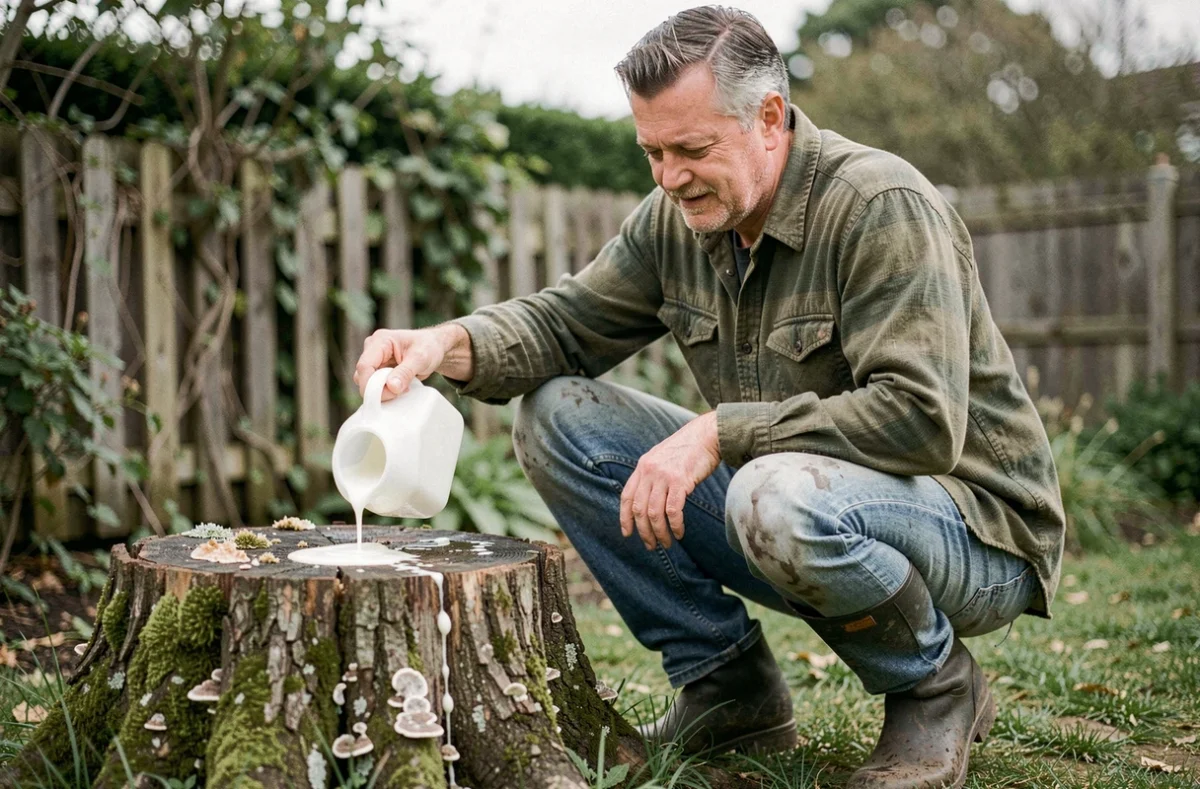
Application protocol for buttermilk on a stump
If you wish to test this method despite the lack of solid evidence, here is the protocol most commonly described by amateur gardeners.
Drilling and preparing the stump
Drill the stump with a large diameter wood bit, creating deep holes spaced a few centimeters apart. The deeper the holes, the more the liquid penetrates the heart of the wood. Slightly tilt the bit so that the buttermilk remains trapped at the bottom rather than flowing out.
- Use a drill or auger to create at least a dozen holes spread across the entire cut surface
- Clean the sawdust to leave maximum free volume in each cavity
- Also make holes on the sides of the stump, at different heights, to expose more wood
Filling and covering
Pour buttermilk into each hole to the brim. Cover the stump with an opaque tarp or a black garbage bag held down by stones. Darkness and moisture accelerate fungal colonization, regardless of the liquid used. Repeat the operation every two to three weeks during the warm season, as evaporation gradually empties the cavities.
This protocol requires patience. Testimonials mention delays of several months to over a year before noticeable softening, with no guarantee of complete decomposition.
Why a stump regrows even when the wood is rotting
A point rarely addressed in tutorials about buttermilk concerns the difference between decomposing wood and preventing regrowth. Rotting a stump does not necessarily stop shoots. The root system, sometimes very extensive, can continue to produce vigorous shoots as long as the nutrient reserves of the main roots are not depleted.
Some species like black locust, poplar, or willow emit aggressive shoots from lateral roots, well beyond the visible perimeter of the stump. A method that only attacks the surface wood does not solve this problem. For these species, debilitation must target the cambium and the nutrient roots, not just the aerial part.
Alternatives to buttermilk: comparative effectiveness of natural methods
Since the effectiveness of buttermilk remains unverified, it is useful to position this tip among other options available to individuals.
- Epsom salt (magnesium sulfate): poured into drilled holes, it gradually dehydrates the wood. The method is slow (several months) but better documented by gardener feedback. Excess salt can affect neighboring plants
- Garlic: cloves pushed into the holes would release allicin, a compound with antifungal properties. The mechanism contradicts the goal, as we are precisely looking to promote decomposing fungi
- Mechanical grinding: a stump grinder reduces the wood below ground level in a few hours. The produced chips can mobilize nitrogen from the soil if buried on-site, which hinders planting in the short term
- Covering alone: covering the stump without adding anything deprives the shoots of light and maintains moisture. On less vigorous species, this free method achieves results comparable to liquids poured into the holes
The choice also depends on the intended use of the land. A stump left to rot is suitable in an unused corner of the garden, but delays a planting or construction project. In this case, mechanical removal or grinding remains the fastest solution.
Known limits and unanswered questions about buttermilk
The main limitation of this method lies in the absence of data. No laboratory or horticultural experimental station has published results on the effect of buttermilk compared to plain water poured under the same conditions. It is therefore impossible to know whether the observed effect comes from lactic ferments, moisture, or simply the passage of time.
Another unknown: buttermilk attracts insects and can emit an unpleasant fermentation odor in a home garden. No guide mentions the impact on soil fauna (earthworms, saproxylic beetles) or on the local pH of the soil around the stump.
Buttermilk remains a popular gardening curiosity. If you attempt the experiment, consider it a complement to covering rather than a standalone method, and plan a mechanical backup if the shoots persist after the first season.