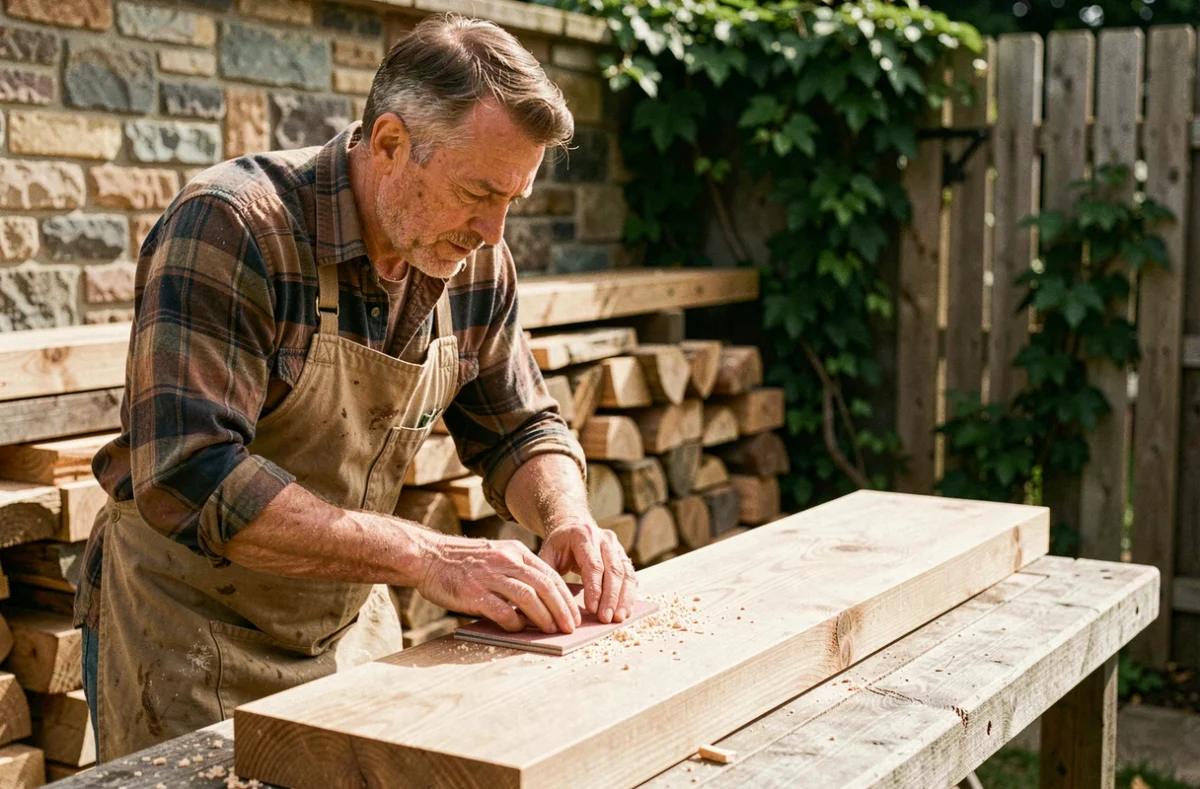
Wood craftsmanship applied to outdoor landscaping is not just about choosing between pine and composite. The choice of species, the regulatory compliance of the project, and the durability of the structure depend on technical parameters that general public guides often overlook. Here, we discuss the points that truly determine the success of a wood landscaping project outdoors.
Use class and natural durability: the real selection criterion for outdoor wood
Wood intended for outdoor use must meet a use class suitable for its exposure. For a terrace in direct contact with the ground or subject to water stagnation, class 4 is required. A ventilated vertical cladding can suffice with class 3b.
European softwoods (Scots pine, spruce) only reach class 4 after autoclave treatment. Larch and Douglas fir offer natural durability in class 3, sufficient for garden furniture or low-exposure fences. The often-underestimated chestnut naturally reaches class 4 without any chemical treatment.
Regarding exotic woods, ipe remains a technical reference for high-end terraces. However, we recommend systematically checking the documentary traceability of this species, which is now subject to enhanced regulatory scrutiny. A reputable supplier like Vallette guarantees the origin and compliance of the offered woods, securing the project right from the supply stage.
Thermo-modified wood (ash, high-temperature heated poplar) constitutes a technical alternative to exotics. The process improves dimensional stability and resistance to fungi, but reduces mechanical strength. For heavily used decking, this compromise deserves consideration.
Wood terrace regulations and outdoor landscaping: urban planning pitfalls
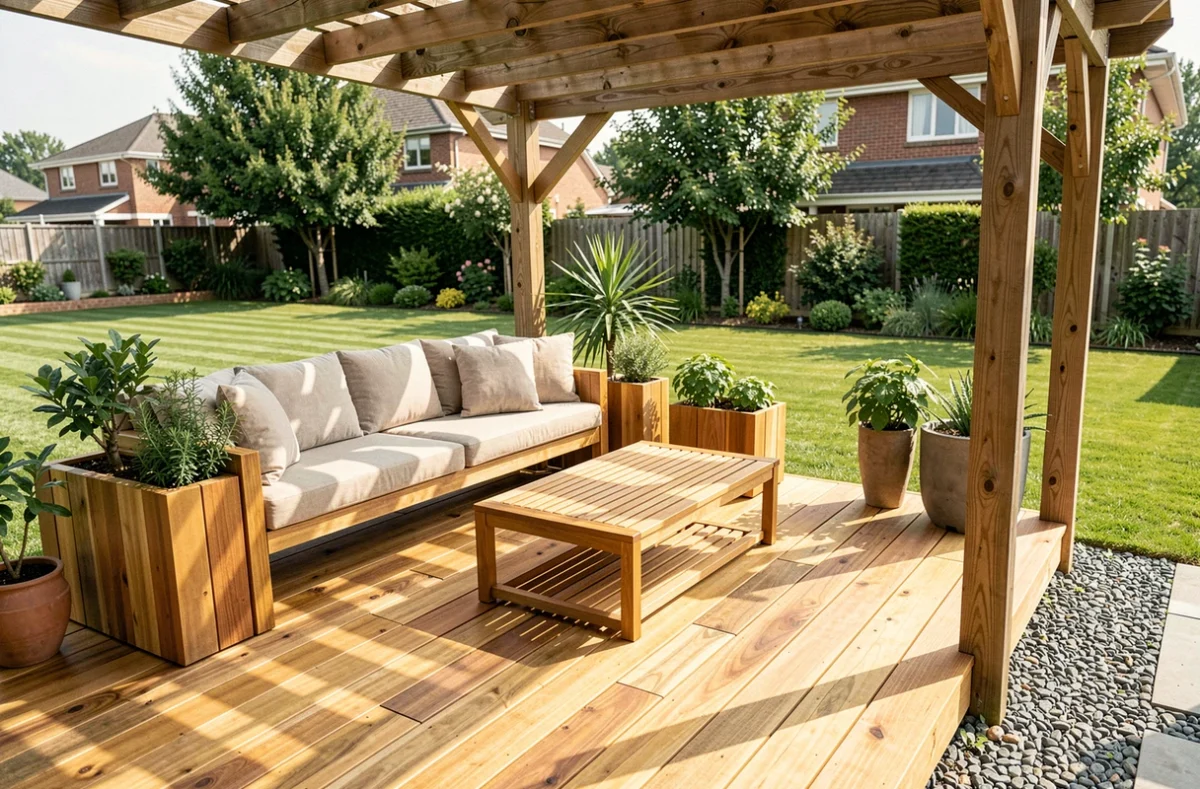
The majority of individuals believe that a ground-level wooden terrace is free from any formalities. In reality, a raised terrace over 60 cm requires a prior declaration, regardless of its area. And if it exceeds a certain area threshold, a building permit may be required.
The local context complicates matters further. In protected areas (heritage sites, surroundings of historical monuments), the choice of species, color, and finish may be imposed by the architect of the Buildings of France. The local urban planning document may also restrict the materials allowed on facades, which directly impacts a wood cladding project.
Soil permeability and land coverage coefficient
Some local urban planning documents impose a minimum proportion of non-impermeable surfaces on the plot. Terraces, pathways, and parking areas are counted together to assess the impermeability rate. A perfectly compliant wooden terrace project may be rejected if, when combined with other hard surfaces, it exceeds the allowed threshold.
We observe that this point is rarely anticipated during design. Integrating draining solutions (decking on pedestals with drainage towards the ground, open joints) can sometimes reduce the project’s accounting impact on overall permeability.
Outdoor wood maintenance: going beyond simple annual oiling
The maintenance of an outdoor wood landscaping project is not limited to applying a coat of saturator every spring. Recent recommendations emphasize three complementary axes:
- Ventilation under decking: insufficient air space under the decking boards promotes moisture retention and accelerates fungal degradation. A continuous ventilation space under the structure is more crucial than the choice of finishing product.
- Drainage of runoff water: slopes must be checked after installation. Even localized stagnation (at the foot of a pergola post, in a corner of the terrace) creates a rotting point in just a few seasons.
- Inspection of fasteners and the supporting structure: stainless steel or treated steel screws resist corrosion, but untreated softwood joists can degrade well before the visible boards. An annual inspection of the structure beneath the decking prevents costly surprises.
The natural graying of wood is not a defect. It is a patina related to UV exposure that does not affect strength. If the gray appearance is bothersome, an oxalic acid-based graying agent restores the original color without aggressive sanding.
Artisanal wooden garden furniture: choice of species and joinery
Artisanal outdoor furniture stands out from industrial furniture by its joinery. A craftsman works with mortise and tenon, dowels, or dovetails where the industry almost exclusively uses screws and metal inserts. The quality of the joinery determines the longevity of the furniture much more than the thickness of the wood.
For garden chairs and tables, black locust (false acacia) represents a relevant technical choice. Naturally class 4 like chestnut, it offers superior hardness that better withstands everyday shocks and scratches. Its tight grain also limits surface water absorption.
Finishing and protection of outdoor wood furniture
On furniture, a penetrating saturator protects better than a film-forming varnish. Varnish eventually chips due to the expansion-contraction cycles related to humidity and temperature variations. The saturator, on the other hand, does not create a film: it nourishes the fiber without chipping, simplifying maintenance.
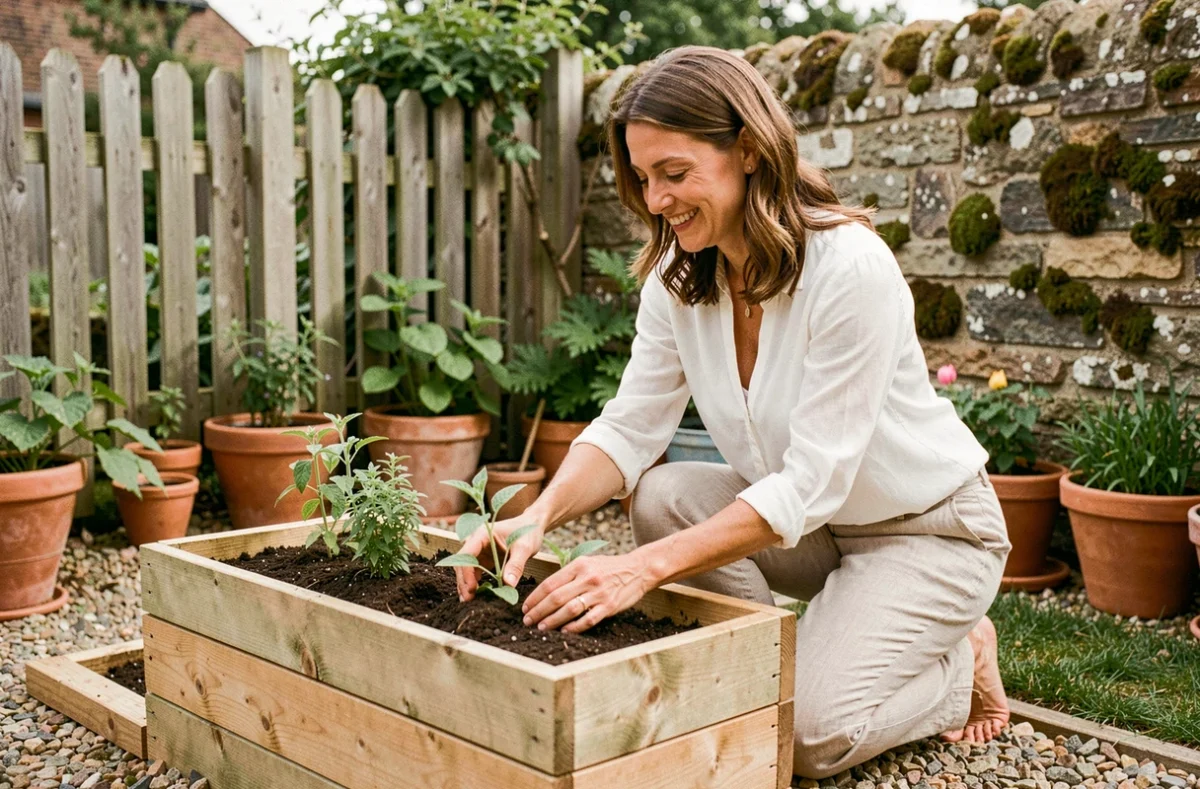
For parts in direct contact with the ground (bench legs, plant boxes), an aluminum or stainless steel sole interposed between the wood and the ground eliminates capillary contact. This design detail extends the lifespan of the furniture by several years without additional treatment.
Designing an outdoor wood layout consistent with the garden style
An outdoor wood space gains coherence when the species and finishes interact with each other. Mixing four different species (ipe terrace, pine fence, Douglas fir pergola, teak furniture) creates a visual patchwork that is difficult to harmonize.
We recommend limiting the project to a maximum of two species: one for structural elements (terrace, pergola), and another for furniture or decorative elements. The light/dark contrast between these two species is enough to create visual rhythm without harming the unity of the layout.
The differential aging of species must also be anticipated. An ipe and an autoclaved pine placed side by side will not evolve in the same way: one will gray uniformly, while the other may green or blacken in spots. Choosing species with similar patina behavior avoids unpleasant surprises in the medium term.