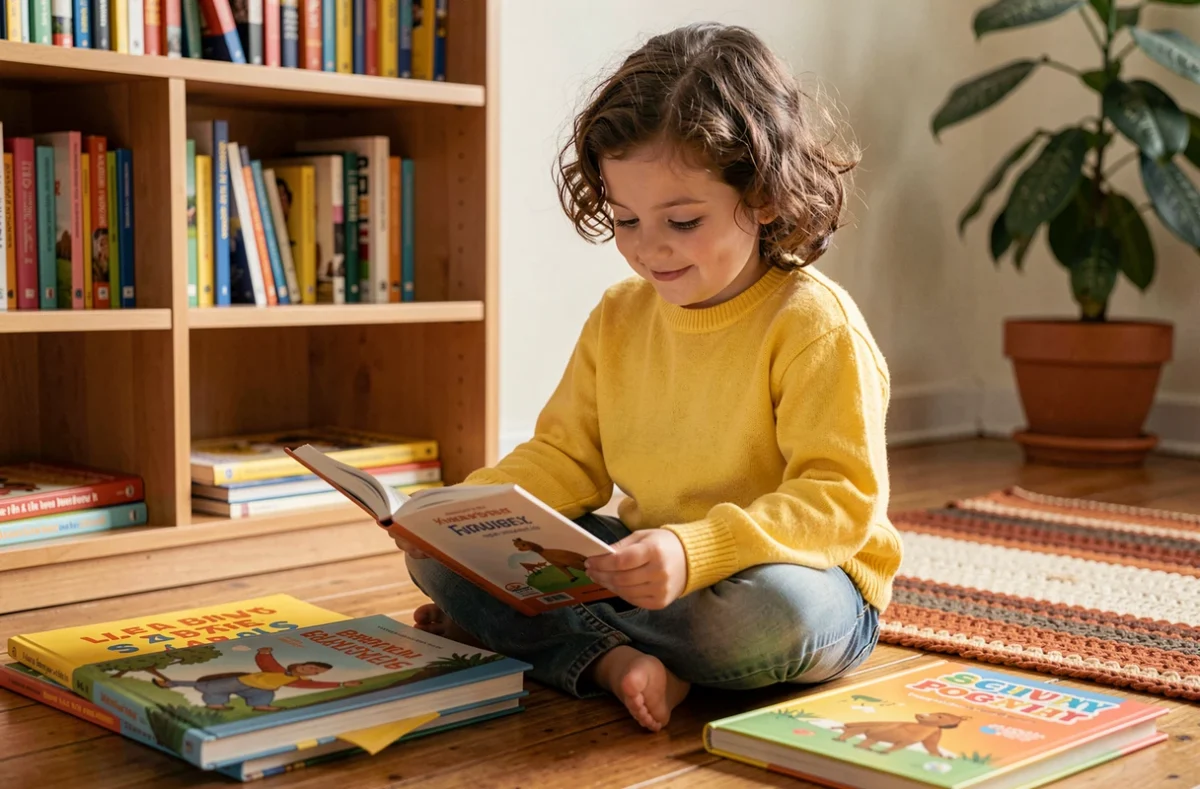
A child drawing alone for an hour, another asking ten questions in a row about ants, a third refusing to let go of their bike despite three falls: flourishing does not manifest in the same way from one child to another. Supporting this development requires identifying what truly nourishes curiosity, confidence, and autonomy, rather than following a list of ready-made recipes.
Screens and free play: what screen time replaces
Have you noticed that a child absorbed in a cartoon does not ask for hugs or stories? The report from the expert commission submitted on April 30, 2024, recommends no screen time before age 3 and discouraged use until age 6. The health booklet distributed since January 1, 2025, reiterates this guideline of zero screen time before age 3.
The main issue is not just the time spent in front of the screen. What the screen replaces is what matters: sleep, free play, physical activity, family interactions. When a 4-year-old spends their evening on a tablet, they are not stacking blocks, they are not asking questions of their parents, and they are not running in the garden.
The specific risks of social media appear later: anxiety, sleep disorders, cyber violence, and cyberbullying. For families looking to structure a framework suitable for each age group, resources on Parents en Action provide concrete guidelines categorized by theme.
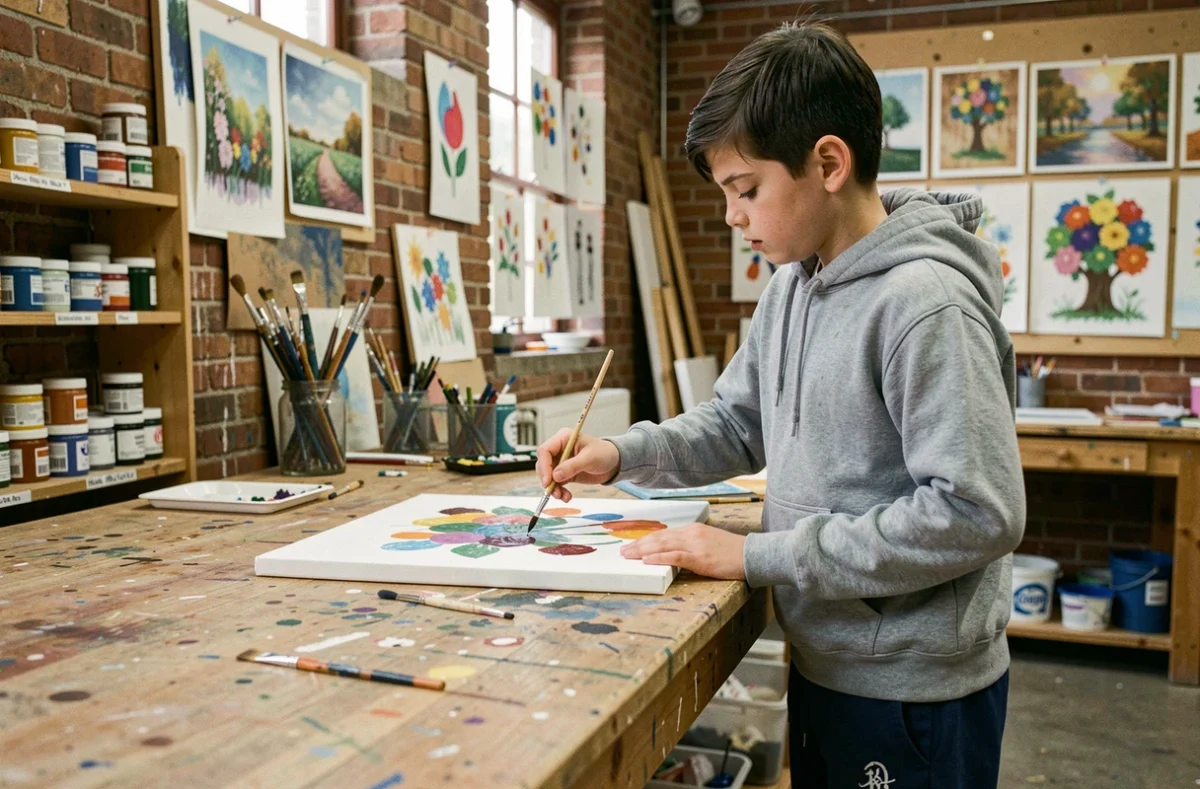
In practical terms, replacing thirty minutes of screen time with thirty minutes of unstructured play (modeling clay, building, drawing) produces visible effects on attention span within a few weeks. The child relearns to be bored, and then to invent.
Early detection of signs of distress in children and adolescents
Flourishing is not just about a smiling child. Some subtle signals deserve special attention, especially during adolescence. The national study EnCLASS 2024, reported by Public Health France, indicates a risk of depression in about one in five high school students and the persistence of suicidal thoughts in this age group.
Signs to observe daily
A child who has been sleeping poorly for several weeks, who withdraws, who loses their appetite, or who suddenly disengages at school is sending signals. Among younger children, expression often comes through the body: recurring stomach aches, unusual restlessness, sudden refusal to go to school.
A common mistake is to wait for the discomfort to be verbalized. An 8-year-old will not say “I am depressed.” They will say “my stomach hurts” or simply stop playing with their peers.
Available resources
- The 3018 is a free, anonymous, and confidential service dedicated to cyberbullying, accessible 7 days a week. It allows for quick reporting and appropriate support.
- The family doctor or pediatrician remains the first point of contact for directing towards psychological support when signs persist.
- School psychologists, often unknown, can intervene directly in the establishment without heavy administrative procedures for parents.
Early detection does not mean over-interpreting every mood change. An isolated signal is not a diagnosis, but a repeated signal over several weeks justifies a consultation.
Parent-child communication: building trust through active listening
Why do some children spontaneously share their day while others respond “nothing” to every question? The difference rarely lies in the child’s character. It often depends on how the question is asked.
“How was your day?” calls for a closed response. “What made you laugh today?” opens up a narrative. Open and specific questions trigger conversation.
Active listening does not require specialized training. It relies on three simple gestures: rephrasing what the child has just said, naming the perceived emotion, and resisting the urge to immediately propose a solution. A child who says “Léa doesn’t want to play with me” is not waiting for advice. They first want their sadness to be acknowledged.
Adapting the moment and place
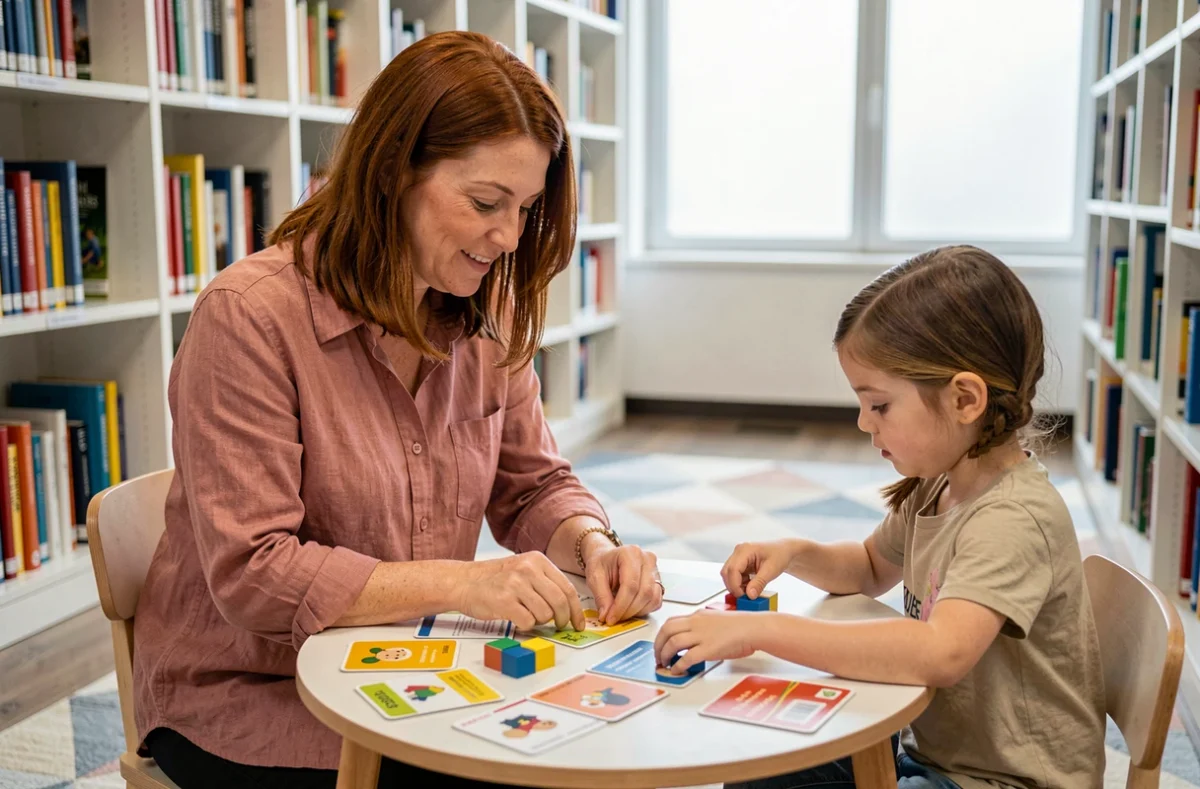
The richest conversations rarely happen face to face. In the car, during a walk, at bedtime: quality exchanges arise in unplanned moments. A child who feels observed will shut down. A child walking next to you, looking elsewhere, will open up more easily.
This logic also applies to adolescents. Imposing a “talking time” has the opposite effect. It is better to multiply informal opportunities and accept that some evenings, the answer remains “nothing.”
Learning and autonomy: letting the child make mistakes
A child who builds a tower of blocks and watches it collapse learns more than one whose parent corrects the balance at every level. Mistakes are the main engine of learning, not an obstacle to be corrected.
In practical terms, this means resisting three common reflexes:
- Redoing the shoelace that the child takes five minutes to tie (they will learn faster if we let them fail ten times).
- Immediately correcting a mistake in a school exercise instead of asking “what do you think about it?”
- Choosing the extracurricular activity for them because we think it is more educational.
Autonomy is built through repeated experiences of choice, not through the accumulation of directed activities. A child who decides to do pottery instead of piano develops their ability to choose, even if pottery does not appear on any resume.
The family environment plays a direct role: a space where the child can access their belongings alone (clothes at their height, accessible drawing materials) encourages initiative. Conversely, a setting where everything requires a request to the adult hinders the natural drive towards autonomy.
A child’s flourishing is played out in these daily details: a well-posed question, a screen replaced by free play, a failure that is allowed to happen. No single method works for all children, but attentive identification of real needs, tailored to each age, remains the most reliable foundation.